Here's why:
* Amino Acids: The building blocks of proteins are amino acids. Each amino acid has a central carbon atom bonded to an amino group (-NH2), a carboxyl group (-COOH), a hydrogen atom, and a unique side chain (R group).
* Polymerization: When amino acids join together, they form a peptide bond. This bond is formed through a dehydration reaction, where a water molecule is removed. The process continues, creating a chain of amino acids called a polypeptide.
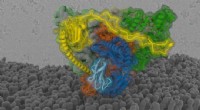
* Proteins: Proteins are large, complex macromolecules composed of one or more polypeptide chains folded into specific three-dimensional structures. These structures are crucial for their diverse functions in the body, such as:
* Enzymes: Catalyzing biochemical reactions
* Structural Components: Providing support and shape to cells and tissues
* Hormones: Regulating cellular processes
* Antibodies: Defending against pathogens
* Transport: Moving substances across cell membranes
So, polymerization of amino acids is the process that gives rise to the diverse and essential proteins found in living organisms.