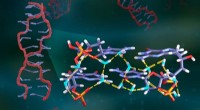
1. Atoms: The Fundamental Units
* Definition: Atoms are the basic building blocks of all matter. They are incredibly tiny particles that consist of a dense nucleus (containing protons and neutrons) surrounded by a cloud of negatively charged electrons.
* Examples: Hydrogen (H), Oxygen (O), Carbon (C), Nitrogen (N)
2. Molecules: Combining Atoms
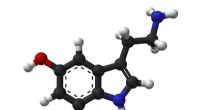
* Definition: Molecules are formed when two or more atoms bond together chemically. These bonds can be strong (covalent) or weaker (ionic).
* Examples:
* Water (H₂O): Two hydrogen atoms bond with one oxygen atom.
* Carbon Dioxide (CO₂): One carbon atom bonds with two oxygen atoms.
* Glucose (C₆H₁₂O₆): A complex molecule made of carbon, hydrogen, and oxygen atoms.
3. Cells: The Basic Units of Life
* Definition: Cells are the smallest unit of life that can carry out all the processes necessary for life. They are enclosed by a membrane and contain a variety of molecules and structures.
* Key Components:
* Cell membrane: Encloses the cell and regulates what enters and exits.
* Cytoplasm: The jelly-like substance within the cell where many chemical reactions occur.
* DNA: The genetic material that carries the instructions for building and maintaining the cell.
* Ribosomes: Organelles responsible for protein synthesis.
* Mitochondria: Organelles that provide energy to the cell.
Relationship Summary
* Atoms are the building blocks of molecules. Just like bricks make a wall, atoms combine to form molecules.
* Molecules are the building blocks of cells. Think of a house - it's made of many different materials (bricks, wood, etc.), just like a cell is made of many different types of molecules.
* Cells are the basic unit of life. They are the smallest structures that can independently carry out all the functions needed for life.
In short:
* Atoms are like the Lego blocks of life.
* Molecules are like the structures you build with those blocks.
* Cells are like the intricate machines made from those structures, capable of performing amazing tasks.