Here's why:
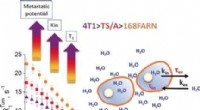
* Disruption of Water Structure: When a solute dissolves in water, it disrupts the normal hydrogen bonding interactions between water molecules. These interactions are crucial for forming the ordered crystalline structure of ice.
* Lowering the Vapor Pressure: The presence of a solute lowers the vapor pressure of the solution compared to pure water. This means the solution needs to be cooled to a lower temperature to reach the same vapor pressure as the solid phase (ice), leading to a lower freezing point.
Colligative Properties
Freezing point depression is a colligative property, which means it depends only on the concentration of solute particles, not on the specific type of solute. The greater the concentration of solute particles, the greater the freezing point depression.
Example:
Adding salt to water lowers the freezing point. This is why we use salt on roads in winter to melt ice.