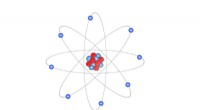
* Nitrogen's Inert Nature: Nitrogen is a very stable molecule due to the strong triple bond between its atoms. This makes it relatively unreactive.
* HCl as an Acid: Hydrochloric acid is a strong acid, meaning it readily donates protons (H⁺). However, it's not a strong enough oxidizing agent to break the strong triple bond in nitrogen.
In summary: The lack of reactivity between nitrogen and hydrochloric acid is due to the strong triple bond in nitrogen and the inability of HCl to act as a strong enough oxidizing agent.
However, there are some exceptions:
* Under very specific conditions: Nitrogen can react with HCl in the presence of catalysts or at extremely high temperatures and pressures. These reactions are not commonly encountered.
* Formation of Ammonium Chloride: While nitrogen itself does not react, ammonia (NH₃), which contains nitrogen, will react with HCl to form ammonium chloride (NH₄Cl). This reaction is a simple acid-base reaction:
NH₃(g) + HCl(g) → NH₄Cl(s)
Remember, the general rule is that nitrogen is very inert and does not readily react with HCl.