* Enzymes are biological catalysts: They speed up chemical reactions without being consumed in the process. They achieve this by lowering the activation energy required for the reaction to occur.
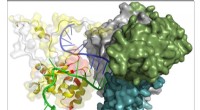
* Specificity: Enzymes are highly specific, meaning they typically only catalyze one or a very small number of reactions. This specificity arises from the unique three-dimensional structure of the enzyme, which creates a specific active site that binds to the substrate (the molecule being acted upon).
* Breaking and forming bonds: Enzymes can catalyze reactions that involve:
* Breaking bonds: This is called hydrolysis, where water is used to break a bond between two molecules. For example, the enzyme lactase breaks down lactose (a sugar) into glucose and galactose.
* Forming bonds: This is called dehydration synthesis, where water is removed to join two molecules. For example, the enzyme DNA polymerase joins nucleotides together to form DNA.
Here's an analogy: Imagine you have a pile of wood that you want to burn. The wood represents the reactants, and the fire represents the reaction. The activation energy is the amount of energy needed to start the fire.
* Without an enzyme: You might need to use a match or lighter to provide the initial energy to get the fire going.
* With an enzyme: The enzyme acts like a kindling, reducing the amount of energy needed to start the fire, making it easier for the wood to burn.
In summary: Enzymes play a crucial role in living organisms by facilitating chemical reactions that would otherwise occur very slowly. They do this by affecting the chemical bonds of molecules, either breaking them or forming new ones.