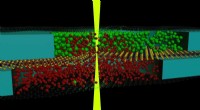
1. Large Intermolecular Spaces: Gas molecules are widely spaced apart, with very weak intermolecular forces. This means there's a lot of empty space between the molecules.
2. Weak Intermolecular Forces: The weak attractive forces between gas molecules, like van der Waals forces, are easily overcome by pressure.
3. Kinetic Energy of Molecules: Gas molecules are in constant random motion, and their high kinetic energy allows them to move freely and occupy the entire volume of their container.
How Compressibility Works:
When pressure is applied to a gas, the molecules are forced closer together. Since there's plenty of empty space, they can readily occupy a smaller volume without significantly resisting the pressure. This is in contrast to solids and liquids, where the molecules are tightly packed, limiting their ability to compress.
Examples:
* Pumping air into a tire: You're compressing the air by forcing more molecules into a smaller space.
* Scuba diving: The air in a scuba tank is compressed to fit a large amount of gas into a small container.
In summary: The large intermolecular spaces, weak intermolecular forces, and the constant motion of gas molecules allow them to readily compress under pressure, leading to their high compressibility.