In a solid:
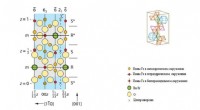
* Particles are tightly packed and arranged in a regular, repeating pattern. This gives solids their rigid shape.
* Particles vibrate in place but have limited translational motion. This means they don't move around freely; they just jiggle slightly.
In a liquid:
* Particles are still close together, but they are no longer rigidly held in place. They can move past each other, which allows liquids to flow and take the shape of their container.
* Particles have much more translational motion. They move around more freely, constantly bumping into each other.
* The average kinetic energy of the particles increases. This means they are moving faster and with more force.
The transition from solid to liquid:
* This change occurs when the substance is heated. As the temperature rises, the particles gain more kinetic energy.
* Eventually, the particles have enough energy to overcome the forces holding them in their fixed positions.
* They begin to slide past each other, and the substance transitions from a solid to a liquid.
In summary:
The movement of particles in a liquid is much more dynamic and free than in a solid. This change is caused by the increase in kinetic energy as the substance absorbs heat.