Understanding the Basics
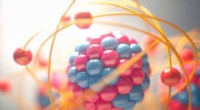
* Element: A pure substance that cannot be broken down into simpler substances by ordinary chemical means. Examples: Gold (Au), Oxygen (O), Carbon (C).
* Compound: A substance formed when two or more different elements are chemically bonded together in a fixed ratio. Examples: Water (H₂O), Sodium chloride (NaCl), Carbon dioxide (CO₂).
Methods to Identify Elements and Compounds
1. Chemical Analysis:
* Decomposition: Can the substance be broken down into simpler substances through chemical reactions (like electrolysis, heating, or reactions with other chemicals)? If yes, it's likely a compound. If no, it might be an element.
* Spectroscopy: Analyzing the light emitted or absorbed by the substance can reveal its unique atomic or molecular structure. This can distinguish between elements and compounds.
* Chromatography: Separating components of a mixture based on their physical and chemical properties. This can help identify if a substance is pure or a mixture of elements/compounds.
2. Physical Properties:
* Boiling Point and Melting Point: Elements typically have very specific melting and boiling points. Compounds will have different melting/boiling points than their constituent elements.
* Density: Elements have distinct densities. Compounds will have a density that is different from their constituent elements.
* Appearance: Elements often have unique colors, textures, and appearances. While compounds can be varied, they may have different characteristics than their constituent elements.
3. Chemical Reactions:
* Reactivity: Elements have characteristic reactivity with other substances. Compounds might react differently than their individual elements.
* Formation: Knowing the reaction conditions under which the unknown substance was formed can provide clues. Compounds are formed by chemical reactions, while elements are found in their pure forms.
Important Considerations:
* Purity: You need to be sure the sample is relatively pure. Impurities can complicate analysis.
* Context: Knowing the source or origin of the unknown substance can provide useful information.
* Safety: Handle unknown chemicals with caution. Always consult safety protocols before performing any experiments.
Example:
Let's say you have a white powder. Here's how you might approach identifying it:
1. Decomposition: Can you break it down into simpler substances by heating? If it decomposes into a gas and a solid residue, it's likely a compound.
2. Spectroscopy: Analyzing the powder using a spectrometer might reveal a specific pattern of light absorption or emission, helping you identify the elements present.
3. Appearance: Is the white powder crystalline or amorphous? Does it dissolve in water? These observations can provide hints.
In summary, identifying an unknown chemical as an element or compound requires a combination of careful observation, experimentation, and analytical techniques.