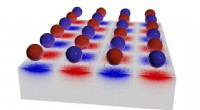
* Solid Structure: In solids, molecules are tightly packed in a regular, repeating pattern called a crystal lattice. They have very limited freedom to move. This close packing leads to a high density.
* Liquid Structure: In liquids, molecules are closer together than in gases, but they have more freedom to move around. They aren't in a fixed pattern like solids. The molecules can slide past each other, allowing liquids to flow. This looser arrangement results in a lower density compared to solids.
* Exceptions: There are some exceptions to this rule. For example, water is less dense as a solid (ice) than as a liquid. This is because the hydrogen bonds between water molecules in ice create a more open, less dense structure.
Key points to remember:
* Density is mass per unit volume.
* Tightly packed molecules = higher density.
* The arrangement of molecules plays a crucial role in density.