Here's a breakdown:
* Activation Energy: This is the minimum amount of energy required for a reaction to occur. Think of it like a hill that reactants need to climb over to become products.
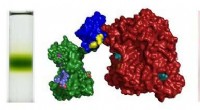
* Enzymes as Catalysts: Enzymes act as biological catalysts. They speed up reactions without being consumed in the process. They do this by providing an alternative reaction pathway with a lower activation energy.
* How Enzymes Lower Activation Energy:
* Providing an alternative reaction pathway: Enzymes bring reactants together in a specific orientation, making it easier for them to interact.
* Stabilizing the transition state: The transition state is the unstable, high-energy intermediate formed during a reaction. Enzymes can bind to the transition state and stabilize it, reducing the energy required for the reaction to proceed.
In essence, enzymes act like a "shortcut" for reactions, making them happen faster and more efficiently by reducing the energy barrier that needs to be overcome.