* Polarity arises from electronegativity: Electronegativity is the ability of an atom in a molecule to attract electrons towards itself. When two atoms with different electronegativities bond, the electrons spend more time closer to the more electronegative atom. This creates a partial negative charge (δ-) on the more electronegative atom and a partial positive charge (δ+) on the less electronegative atom.
* Uneven distribution: This uneven distribution of charge creates a dipole moment – a separation of positive and negative charges within the molecule.
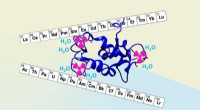
Example: Water (H₂O) is a classic example of a polar molecule. Oxygen is more electronegative than hydrogen, so the electrons in the O-H bonds spend more time near the oxygen atom. This gives the oxygen atom a partial negative charge (δ-) and the hydrogen atoms a partial positive charge (δ+).
Key takeaway: Polar compounds have an uneven distribution of electrical charge, which leads to the formation of dipoles. This polarity plays a significant role in their physical and chemical properties, including their ability to dissolve in water and their interactions with other molecules.