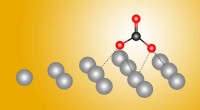
* Dry Ice (Solid Carbon Dioxide): This is the classic example. Dry ice sublimates at room temperature, producing a visible fog of carbon dioxide gas.
* Mothballs: Mothballs are typically made of naphthalene or paradichlorobenzene, both of which sublime slowly, releasing vapors that repel moths.
* Freeze-Dried Foods: Foods are frozen and placed under a vacuum, causing the ice crystals in the food to sublimate, leaving a dehydrated product.
* Iodine: Solid iodine sublimates readily, releasing purple vapors. This is sometimes used in laboratory experiments and for sterilizing medical equipment.
* Snow and Ice: While it may not be immediately obvious, snow and ice can sublimate in cold, dry conditions. This is why snow-covered areas can lose mass even when temperatures remain below freezing.
* Arsenic: Arsenic is a metalloid that sublimes at high temperatures, making it dangerous to handle.
* Camphor: This fragrant compound, found in some medicinal products, readily sublimes, releasing a distinctive aroma.
Other interesting facts about sublimation:
* Reverse Sublimation (Deposition): The opposite process of sublimation is deposition, where a gas directly transitions into a solid. This is how frost forms on surfaces in cold weather.
* Applications of Sublimation: Sublimation plays a role in various applications, including:
* Printing: Dye-sublimation printing utilizes sublimation to transfer images onto materials like fabric and paper.
* Microelectronics: Sublimation is used in the fabrication of semiconductors and other microelectronic devices.
* Purification: Sublimation can be used to purify substances, separating volatile components from less volatile ones.