* Lowering Activation Energy: Catalysts provide an alternative reaction pathway with a lower activation energy. This means less energy is required for the reactant molecules to collide and form products, leading to a faster reaction rate.
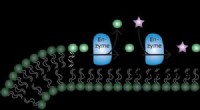
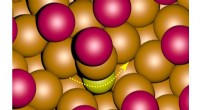
* Increasing Collision Frequency: Catalysts can also increase the frequency of collisions between reactant molecules by providing a surface for them to bind to and interact more effectively.
* Not Consumed in the Reaction: Catalysts are not consumed in the reaction process. They participate in the reaction but emerge unchanged, allowing them to catalyze multiple reactions.
Think of a catalyst as a matchmaker for reactants: It brings them together more easily and helps them react faster without being used up itself.
Example: In the decomposition of hydrogen peroxide (H₂O₂), adding a catalyst like manganese dioxide (MnO₂) speeds up the reaction, causing the peroxide to break down into water and oxygen gas much faster.
Important Note: Catalysts only affect the rate of reaction; they don't change the equilibrium position of the reaction. This means they don't change the amount of product formed at equilibrium, only how quickly that equilibrium is reached.