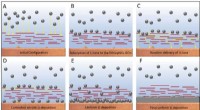
* Chemical change involves the formation of new substances. In corrosion, the original metal reacts with substances like oxygen, water, or acids, resulting in the formation of new compounds (like oxides, hydroxides, or salts). These new compounds have different properties than the original metal.
* Chemical properties describe how a substance reacts with other substances. Corrosion is a specific example of a chemical reaction, a process where a substance changes its chemical composition.
Example:
* Iron rusting is a classic example of corrosion. Iron (Fe) reacts with oxygen (O2) and water (H2O) to form iron oxide (Fe2O3), commonly known as rust. Rust is a different substance from iron, with a different color, texture, and chemical composition.
While corrosion can be influenced by physical factors like temperature and humidity, the underlying process is fundamentally a chemical change.