Understanding Polarity
* Polar molecules have an uneven distribution of electron density, resulting in a positive and negative end (a dipole moment). This happens when there's a difference in electronegativity between the atoms in the molecule.
* Nonpolar molecules have an even distribution of electron density.
Analyzing the Molecules
* F2 (Fluorine): This is a diatomic molecule with identical fluorine atoms. Electronegativity is the same on both sides, so the molecule is nonpolar.
* CO2 (Carbon Dioxide): While oxygen is more electronegative than carbon, the molecule is linear. The two polar bonds (C=O) are symmetrical, canceling each other out. Therefore, CO2 is nonpolar.
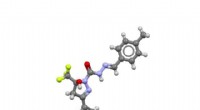
* PF3 (Phosphorus Trifluoride): Phosphorus is less electronegative than fluorine. The three P-F bonds create a trigonal pyramidal shape with an uneven distribution of electron density, making PF3 polar.
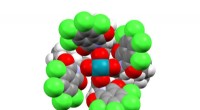
* CF4 (Carbon Tetrafluoride): Carbon is less electronegative than fluorine. However, the four C-F bonds are arranged symmetrically in a tetrahedral shape. This symmetry cancels out the individual bond polarities, making CF4 nonpolar.
* BF3 (Boron Trifluoride): Boron is less electronegative than fluorine. The three B-F bonds are arranged in a trigonal planar shape. While the individual bonds are polar, they are symmetrical and cancel each other out. Therefore, BF3 is nonpolar.
Conclusion
The only polar molecule from the list is PF3 (Phosphorus Trifluoride).