Here's why:
* Valence Electrons: Carbon has four valence electrons, meaning it can form four bonds.
* Strong Bonds: The bonds carbon forms with itself (C-C bonds) are very strong.
* Variety of Bonding: Carbon can form single, double, and triple bonds with itself.
This ability to form long chains and complex structures is the basis for the vast diversity of organic molecules, including:
* Hydrocarbons: Chains and rings of carbon atoms bonded to hydrogen.
* Polymers: Long chains of repeating units.
* Proteins: Complex molecules composed of amino acids linked together.
* DNA and RNA: Genetic material containing a complex structure of linked carbon atoms.
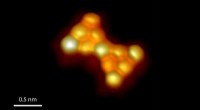
So, while carbon can form four bonds with other atoms, its ability to bond with itself endlessly creates an almost infinite number of possibilities.