Here's a breakdown of how NADPH and ATP are actually produced and what they fix during the dark reaction:
NADPH and ATP synthesis:
* NADPH (Nicotinamide adenine dinucleotide phosphate) is synthesized during the light-dependent reactions of photosynthesis. This process uses light energy to excite electrons, which are then used to reduce NADP+ to NADPH.
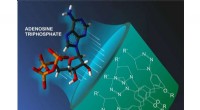
* ATP (Adenosine triphosphate) is also produced during the light-dependent reactions through a process called photophosphorylation. This involves the movement of protons (H+) across a membrane, creating a concentration gradient that is used to power ATP synthesis.
Dark reactions (Calvin Cycle):
* The dark reactions, also known as the Calvin cycle, occur independently of light. They use the NADPH and ATP produced during the light reactions to fix carbon dioxide (CO2) into sugars.
* Carbon fixation is the process of converting inorganic CO2 into organic compounds, specifically glucose, the primary energy source for the plant.
Summary:
* Light reactions: Produce NADPH and ATP using light energy.
* Dark reactions: Use NADPH and ATP to fix CO2 into glucose.
Therefore, the substances fixed during the dark reaction are carbon dioxide (CO2), not NADPH and ATP.