Solid
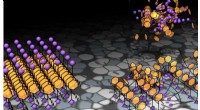
* Particles are tightly packed and arranged in a regular, repeating pattern (crystalline structure). This gives solids their definite shape and volume.
* Particles vibrate in fixed positions. They have low kinetic energy, meaning they don't move around freely.
Liquid
* Particles are close together but can move around each other. This gives liquids their ability to flow and take the shape of their container.
* Particles have more kinetic energy than solids. They vibrate and move more freely, but not as freely as gas particles.
Gas
* Particles are far apart and move randomly. This makes gases compressible and allows them to expand to fill any container.
* Particles have the highest kinetic energy. They move very quickly and collide frequently.
Important Note:
* All states of matter are made up of the same fundamental particles (atoms and molecules). It's the arrangement and movement of these particles that determine the state of matter.
* States of matter can change. Adding heat energy increases the kinetic energy of particles, causing them to move faster and transition from solid to liquid (melting), or liquid to gas (boiling/evaporation). Removing heat energy has the opposite effect.