Factors affecting reaction rate:
* Temperature: Higher temperatures increase the kinetic energy of molecules, leading to more frequent and energetic collisions, thus increasing the reaction rate.
* Concentration: Higher concentration of reactants leads to more frequent collisions, increasing the reaction rate.
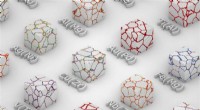
* Surface area: For reactions involving solids, a larger surface area provides more points of contact for reactants, increasing the reaction rate.
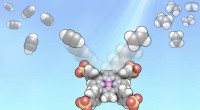
* Catalyst: A catalyst provides an alternative reaction pathway with a lower activation energy, speeding up the reaction without being consumed.
* Nature of the reactants: The chemical structure and bonds of reactants influence their reactivity. Some molecules react readily, while others are less reactive.
Factors affecting reaction direction:
* Enthalpy change (ΔH): Exothermic reactions (negative ΔH) release heat and are favored at lower temperatures. Endothermic reactions (positive ΔH) absorb heat and are favored at higher temperatures.
* Entropy change (ΔS): Reactions that increase disorder (positive ΔS) are more likely to occur spontaneously.
* Gibbs Free Energy Change (ΔG): This combines the effects of enthalpy and entropy. Reactions with a negative ΔG are spontaneous and will proceed in the forward direction.
* Equilibrium constant (K): This value indicates the relative amounts of products and reactants at equilibrium. A large K indicates that the reaction favors product formation.
Other factors:
* Pressure: Pressure can influence the rate and direction of gas-phase reactions. Increasing pressure can favor reactions that produce fewer gas molecules.
* Light: Photochemical reactions are initiated by light, which can provide the energy needed to break bonds and start a reaction.
It's important to note that these factors are often interconnected and work together to determine the overall rate and direction of a chemical reaction.