Chemical equilibrium is a dynamic state where the rates of the forward and reverse reactions are equal, resulting in no net change in the concentrations of reactants and products. However, this equilibrium can be shifted to favor product formation by applying certain conditions, known as Le Chatelier's Principle.
Le Chatelier's Principle states:
*If a change of condition is applied to a system in equilibrium, the system will shift in a direction that relieves the stress.*
Here are the conditions that can shift the equilibrium to favor products:
1. Adding More Reactants:
* Stress: Increased concentration of reactants.
* Shift: The equilibrium will shift to the right, consuming the added reactants and producing more products to relieve the stress.
2. Removing Products:
* Stress: Decreased concentration of products.
* Shift: The equilibrium will shift to the right, producing more products to replenish the removed ones and restore the equilibrium.
3. Increasing Temperature:
* Stress: Increased temperature.
* Shift: For endothermic reactions (heat is absorbed as a reactant), the equilibrium will shift to the right, favoring the products and consuming heat. For exothermic reactions (heat is released as a product), the equilibrium will shift to the left, favoring the reactants and releasing heat.
4. Decreasing Temperature:
* Stress: Decreased temperature.
* Shift: For endothermic reactions, the equilibrium will shift to the left, favoring the reactants and releasing heat. For exothermic reactions, the equilibrium will shift to the right, favoring the products and absorbing heat.
5. Increasing Pressure:
* Stress: Increased pressure.
* Shift: The equilibrium will shift to the side with fewer moles of gas to relieve the pressure. For reactions involving gases, if the product side has fewer moles of gas than the reactant side, the equilibrium will shift to the right.
6. Decreasing Pressure:
* Stress: Decreased pressure.
* Shift: The equilibrium will shift to the side with more moles of gas to increase the pressure. If the product side has more moles of gas than the reactant side, the equilibrium will shift to the right.
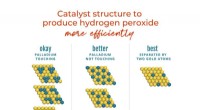
7. Adding a Catalyst:
* Stress: Addition of a catalyst.
* Shift: A catalyst speeds up both the forward and reverse reactions equally, leading to faster attainment of equilibrium but not a shift in the position of equilibrium. It does not favor either products or reactants.
In summary, by applying these conditions, you can manipulate the equilibrium of a reaction to produce more desired products.
Note: The extent to which the equilibrium shifts depends on the specific reaction and the magnitude of the change in condition.