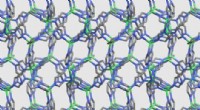
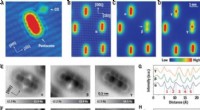
* Sea of Electrons: In a metallic solid, the outer valence electrons of the metal atoms are not tightly bound to any particular atom. Instead, they are delocalized and form a "sea" of electrons that can move freely throughout the entire lattice structure.
* Electrostatic Attraction: The positively charged metal ions (formed by the loss of valence electrons) are held together by the electrostatic attraction to this sea of negatively charged electrons.
* Properties: This unique structure is responsible for many of the characteristic properties of metals, including:
* Good electrical conductivity: The free-moving electrons can easily carry an electrical current.
* Good thermal conductivity: The free electrons can also transfer heat energy efficiently.
* Malleability and ductility: The ability to be shaped or drawn into wires is due to the fact that the metallic bonds are non-directional. The electrons can easily rearrange to accommodate changes in the metal's shape.
* Luster: The free electrons can absorb and re-emit light, giving metals their shiny appearance.
In summary: Metallic bonding is a unique type of bonding where the valence electrons are delocalized and free to move throughout the metal lattice, creating a "sea of electrons" that holds the positively charged metal ions together.