* Polarity: Carboxylic acids have a polar carboxyl group (-COOH) due to the electronegative oxygen atoms. This polar group can form hydrogen bonds with water molecules, contributing to solubility.
* Nonpolar Hydrocarbon Chain: As the chain length increases, the nonpolar hydrocarbon portion of the molecule becomes larger. This hydrocarbon chain is hydrophobic (water-repelling) and interferes with the ability of the polar carboxyl group to interact with water molecules.
* Hydrophobic Effect: The larger hydrocarbon chain disrupts the hydrogen bonding network in water, making it energetically unfavorable for the carboxylic acid to dissolve.
In summary:
* Short chain carboxylic acids: Are more soluble in water due to the dominant effect of the polar carboxyl group.
* Long chain carboxylic acids: Become less soluble due to the increasing dominance of the nonpolar hydrocarbon chain.
Example:
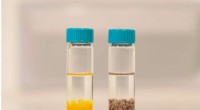
* Formic acid (HCOOH): Highly soluble in water due to its small size and strong polar interaction.
* Stearic acid (CH3(CH2)16COOH): Very poorly soluble in water due to its long, nonpolar hydrocarbon chain.