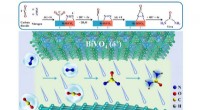
Water molecules, denoted as H₂O, are formed by the covalent bonding of two hydrogen atoms to one oxygen atom. Here's how it works:
* Oxygen has six electrons in its outer shell, and it needs two more to complete its octet.
* Hydrogen has one electron in its outer shell and needs one more to complete its duet.
Oxygen shares its two outer electrons with the two hydrogen atoms, forming covalent bonds where both atoms share a pair of electrons. This sharing creates a stable molecule with a bent shape, where the hydrogen atoms are at a 104.5° angle from each other.
While the covalent bonds within a water molecule are strong, water molecules also exhibit hydrogen bonding with each other. This is a type of intermolecular force, meaning it occurs between different molecules.
* Hydrogen bonding occurs because oxygen is highly electronegative, meaning it attracts electrons more strongly than hydrogen.
* This creates a slight partial negative charge on the oxygen atom and a partial positive charge on the hydrogen atoms.
* The positive end of one water molecule can then form a weak attraction with the negative end of another water molecule, creating a hydrogen bond.
These hydrogen bonds are weaker than covalent bonds but are still significant and responsible for many of water's unique properties, such as:
* High boiling point: Due to the strong hydrogen bonds, water requires a significant amount of energy to break the bonds and change state from liquid to gas.
* High surface tension: The strong hydrogen bonds create a cohesive force that holds water molecules together, giving it a high surface tension.
* Excellent solvent: Water's polar nature allows it to dissolve many ionic compounds and polar molecules.
* High heat capacity: Water can absorb and store a large amount of heat due to the hydrogen bonds.
These properties are essential for life on Earth, making water a crucial component of our planet's ecosystem.