1. Hemoglobin's Role:
* Hemoglobin, the protein in red blood cells responsible for carrying oxygen, contains heme, an iron-containing molecule.
* Heme possesses oxidative activity, meaning it can readily transfer electrons.
2. Guaiac Reagent:
* The guaiac reagent is a solution containing guaiac, a compound derived from the guaiac tree.
* Guaiac is a weak reducing agent (it readily donates electrons).
* In its oxidized state, guaiac is colorless.
* In its reduced state, guaiac turns blue.
3. The Reaction:
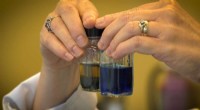
* When blood (specifically hemoglobin) is present, the heme in hemoglobin oxidizes the guaiac reagent.
* This oxidation causes the guaiac to change from its colorless, oxidized state to a blue, reduced state.
* The intensity of the blue color is directly proportional to the amount of blood present.
4. Applications:
* Fecal occult blood testing (FOBT): The guaiac reaction is commonly used in FOBT to detect blood in stool samples, which can be a sign of gastrointestinal bleeding.
* Other applications: The guaiac reaction can also be used in forensic science to detect blood at crime scenes and in medical settings to detect blood in urine or other bodily fluids.
In summary, the guaiac reaction relies on the oxidative activity of hemoglobin to oxidize the guaiac reagent, causing a color change from colorless to blue, indicating the presence of blood.