The Reaction:
HC₂H₃O₂ (aq) + LiOH (aq) → LiC₂H₃O₂ (aq) + H₂O (l)
Explanation:
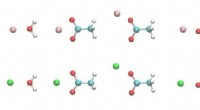
* Acetic acid (HC₂H₃O₂) is a weak acid. It partially ionizes in water to produce hydrogen ions (H⁺).
* Lithium hydroxide (LiOH) is a strong base. It completely ionizes in water to produce hydroxide ions (OH⁻).
* When the acid and base react, the hydrogen ions from the acid combine with the hydroxide ions from the base to form water (H₂O). This is the neutralization process.
* The remaining ions (Li⁺ and C₂H₃O₂⁻) form lithium acetate (LiC₂H₃O₂), a salt.
Result:
The reaction produces water and a salt, lithium acetate. The solution will be neutral or slightly basic because lithium acetate is a weak base.
Important Note:
* The reaction is exothermic, meaning it releases heat.
* The pH of the solution will change depending on the initial concentrations of the acid and base. If the acid and base are in equal amounts, the final solution will be neutral (pH 7). If there is an excess of acid, the solution will be acidic, and if there is an excess of base, the solution will be basic.
Safety:
* Lithium hydroxide is corrosive. Handle it with care and wear appropriate safety gear.
* Acetic acid is a mild acid. It can irritate skin and eyes.