1. Organic Synthesis:
* Protecting Group: DBA can be used as a protecting group for carbonyl compounds (aldehydes and ketones). It reacts with them to form a stable adduct, protecting the carbonyl group from unwanted reactions. This protection is particularly useful in multi-step syntheses.
* Catalyst: DBA can act as a catalyst in certain organic reactions, like the Diels-Alder reaction.
* Ligand: DBA can also serve as a ligand in coordination chemistry, forming complexes with transition metals.
2. Materials Science:
* Polymerization: DBA can be used in the synthesis of polymers, especially those with interesting optical and electronic properties.
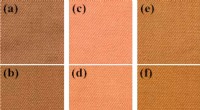
* Dyeing: DBA exhibits photochromic properties, meaning its color changes under UV light. This makes it useful for developing photochromic materials for optical applications.
* Nonlinear Optics: DBA has been studied for its potential in nonlinear optical applications due to its large molecular hyperpolarizability.
3. Other Uses:
* Pigment: DBA's vibrant yellow color makes it useful as a pigment in paints, inks, and other colorants.
* UV Absorber: Due to its ability to absorb UV light, DBA finds use in sunscreens and other UV protective products.
* Analytical Chemistry: DBA can be used as a standard in analytical chemistry for calibration and quantification purposes.
Note: The specific use of DBA will depend on its form (e.g., cis or trans isomer) and the specific reaction conditions.
Safety:
It's important to remember that DBA is a chemical and should be handled with care. It may cause skin irritation and should be kept away from heat and open flames.