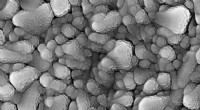
1. Porous Structure: These materials have a high volume of interconnected pores, similar to the network of holes in a sponge. This allows for:
* High surface area: The many pores provide a large surface area for interaction with other materials or fluids.
* Absorption and retention: These materials can readily absorb liquids and gases, holding them within their pores.
* Lightweight: The presence of air within the pores makes them relatively light for their volume.
2. Flexibility and Elasticity: Some materials that are considered "spongy" may also possess:
* Compressibility: They can be squeezed or compressed, reducing their volume but recovering their original shape when the pressure is released.
* Resilience: They can absorb impacts and shocks without breaking, due to their ability to deform and then spring back.
Examples of Materials with Spongy Characteristics:
* Sponges: Obviously, natural and synthetic sponges are the prototypical examples of spongy materials.
* Foams: Polyurethane foam, melamine foam, and other types of foams exhibit porous structure, elasticity, and absorption properties.
* Aerogels: These ultralight materials are highly porous and have remarkable thermal insulation properties.
* Some types of ceramics: Certain ceramics, like porous ceramics used in filtration, can be considered spongy due to their interconnected pore structure.
It's important to note that the term "spongy solid" is more of a descriptive term than a scientific classification. Materials may have varying degrees of "sponginess" based on their specific properties and applications.