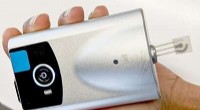
1. pH Meter:
* Best for: Accurate, precise measurements, especially for research and quality control.
* Pros: Highly accurate, fast readings, good for a wide pH range.
* Cons: Can be expensive, requires calibration, may be affected by temperature and solution conductivity.
2. pH Indicator Paper:
* Best for: Quick, approximate pH measurements, for educational purposes or basic testing.
* Pros: Inexpensive, convenient, easy to use.
* Cons: Less accurate than a meter, limited color change range, difficult to read for low-contrast colors.
3. pH Indicator Solutions:
* Best for: Qualitative pH determination, for identifying approximate pH ranges in a solution.
* Pros: Relatively cheap, can provide a visual change in color.
* Cons: Less accurate than a meter or paper, color changes are subjective, requires specific pH ranges for each indicator.
4. Titration:
* Best for: Determining the exact concentration of an acid or base in a solution.
* Pros: Highly accurate, can determine the exact pH at various points of the titration.
* Cons: Time-consuming, requires careful handling and precise measurements.
5. Spectrophotometer:
* Best for: Measuring the absorbance of a solution at a specific wavelength, which can be related to pH.
* Pros: Highly accurate, can be automated.
* Cons: Requires a specific pH-sensitive dye, can be expensive.
Factors to consider when choosing a method:
* Accuracy required: How precise does the measurement need to be?
* Cost: How much can you spend on the equipment and reagents?
* Time constraints: How quickly do you need the results?
* Solution type: What type of solution are you testing?
* Available resources: What equipment and materials do you have access to?
In summary:
* For high accuracy and research-level work, a pH meter is usually the best choice.
* For quick, basic testing or educational purposes, pH paper is a suitable option.
* Titration is used for determining the concentration of acids or bases and for obtaining precise pH values at specific points.
* Spectrophotometry is employed when a pH-sensitive dye is available and high accuracy is required.
Ultimately, the best method depends on your specific needs and limitations.