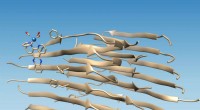
Macromolecules: These are large, complex molecules that are essential for life. They are formed by the joining together of many smaller units.
Monomers: These are the small building blocks that make up macromolecules. They are like the individual bricks that are used to build a house.
Here's a table outlining the four main types of macromolecules and their corresponding monomers:
| Macromolecule | Monomers | Examples |
|---|---|---|
| Carbohydrates | Monosaccharides (simple sugars) | Glucose, fructose, starch, cellulose |
| Lipids (Fats) | Fatty acids and glycerol | Butter, oils, cholesterol |
| Proteins | Amino acids | Enzymes, hormones, antibodies |
| Nucleic Acids | Nucleotides | DNA, RNA |
So, instead of "precursors", think of monomers as the essential building blocks that are linked together to form the larger macromolecules.