Here's why:
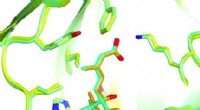
* Enzymes: Proteins act as enzymes, which are biological catalysts that speed up chemical reactions without being consumed in the process. They do this by lowering the activation energy required for a reaction to occur.
* Regulation: Proteins play critical roles in regulating cell processes, including:
* Signaling pathways: Proteins act as receptors, messengers, and effectors in signaling pathways that communicate information within and between cells.
* Gene expression: Proteins control the transcription and translation of genes, determining which proteins are produced and when.
* Transport: Proteins act as carriers, transporting molecules across cell membranes.
* Structure: Proteins provide structural support to cells and tissues.
While other organic molecules like carbohydrates and lipids are essential for cell function, proteins are uniquely suited for these regulatory and catalytic roles due to their complex structure and diverse functionalities.