1. Identify the Elements and Their Subscripts
* Look at the chemical formula of the compound. For example, let's consider water (H₂O).
* You have hydrogen (H) and oxygen (O).
* The subscript "2" after hydrogen means there are two hydrogen atoms in each water molecule.
2. Look Up Atomic Masses on the Periodic Table
* Locate each element on the periodic table.
* Note the atomic mass of each element. Atomic masses are usually shown below the element's symbol. For example:
* Hydrogen (H): 1.01 g/mol
* Oxygen (O): 16.00 g/mol
3. Multiply Atomic Mass by Subscript
* For each element, multiply its atomic mass by its subscript in the chemical formula.
* Hydrogen (H): 1.01 g/mol * 2 = 2.02 g/mol
* Oxygen (O): 16.00 g/mol * 1 = 16.00 g/mol
4. Add the Masses Together
* Add the results from step 3 to find the molar mass of the compound.
* Molar mass of water (H₂O): 2.02 g/mol + 16.00 g/mol = 18.02 g/mol
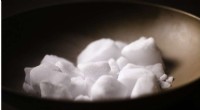
Example: Finding the Molar Mass of Calcium Chloride (CaCl₂)
1. Elements: Calcium (Ca) and Chlorine (Cl)
2. Atomic Masses:
* Calcium (Ca): 40.08 g/mol
* Chlorine (Cl): 35.45 g/mol
3. Multiplied Masses:
* Calcium (Ca): 40.08 g/mol * 1 = 40.08 g/mol
* Chlorine (Cl): 35.45 g/mol * 2 = 70.90 g/mol
4. Molar Mass: 40.08 g/mol + 70.90 g/mol = 110.98 g/mol
Key Points:
* Units: Molar mass is expressed in grams per mole (g/mol).
* Significant Figures: Pay attention to the number of significant figures in the atomic masses you use. Round your final answer appropriately.
* Practice: The more you practice, the easier it will become to calculate molar mass.