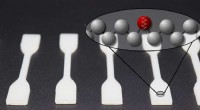
Lustre:
* Free Electrons: Metals have a "sea" of delocalized electrons that are not tightly bound to any particular atom. These electrons are free to move throughout the metal lattice.
* Light Interaction: When light strikes a metal surface, these free electrons absorb the light energy and then re-emit it. This re-emission of light is what gives metals their shiny appearance, or lustre.
* Wide Range of Wavelengths: The free electrons can absorb and re-emit a wide range of wavelengths of light, which is why metals can appear in various colors depending on the specific metal and its surface properties.
Electrical Conductivity:
* Free Electrons Again: The same delocalized electrons responsible for lustre also play a crucial role in electrical conductivity.
* Electron Flow: When an electric potential difference (voltage) is applied across a metal, these free electrons can easily move in response to the electric field. This flow of electrons constitutes an electric current.
* Resistance: The resistance to this electron flow, known as electrical resistivity, is low in metals due to the abundance of free electrons. This is why metals are excellent conductors of electricity.
Summary:
The presence of a "sea" of delocalized electrons in metals is the key to both their lustre and electrical conductivity. These electrons are responsible for absorbing and re-emitting light (lustre), and they can move freely under an electric field (conductivity).