Here's why:
* Phase Change: Melting is a phase change from solid to liquid. During this change, the energy added to the substance is used to break the bonds between molecules in the solid state, not to increase their kinetic energy (which would lead to a temperature increase).
* Latent Heat of Fusion: The energy required to change the state of a substance at a constant temperature is called the latent heat of fusion. This energy is absorbed by the substance as it melts, keeping the temperature constant.
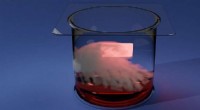
Think of it like this: Imagine adding heat to a block of ice. The ice will absorb the heat and its temperature will rise until it reaches the melting point (0 degrees Celsius). At this point, the heat is no longer increasing the temperature but is being used to break the bonds between water molecules, changing the ice into liquid water. The temperature will stay at 0 degrees Celsius until all the ice has melted.
Only after all the substance has melted will the added heat start increasing the temperature of the liquid.