Here's why:
* Atoms are incredibly small: They are far too small to be seen with even the most powerful microscopes.
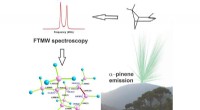
* Visualizations use models: Images of atoms and molecules are created using various models and techniques, often based on data from sophisticated instruments like electron microscopes.
Here's what different types of images might show:
* Ball-and-stick models: These are common representations that use spheres to represent atoms and sticks to represent the bonds between them. They are useful for showing the relative positions of atoms and the angles of the bonds.
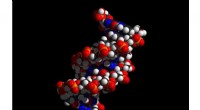
* Space-filling models: These models show the relative sizes of atoms and how they fill space within a molecule. They are useful for understanding how molecules interact with each other.
* Electron density maps: These maps are generated from electron diffraction data and show where electrons are most likely to be found around the atom's nucleus. These images are useful for understanding the chemical bonding and reactivity of the molecule.
Important to Remember:
* These images are not photos: While they are helpful tools, they are not actual photographs of atoms and molecules.
* They represent simplified models: These models are based on scientific data and theories, but they are simplified representations of reality.
* The "real" structure is much more complex: The actual behavior of electrons within atoms and molecules is governed by quantum mechanics, and it's far more complicated than what these images show.
Overall, images of atoms and molecules are valuable tools for visualizing these tiny building blocks of the universe, but it's essential to remember their limitations and the scientific principles behind them.