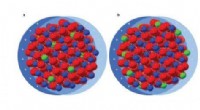
* No new substances are formed: When salt (NaCl) dissolves in water, the sodium (Na+) and chloride (Cl-) ions separate and become surrounded by water molecules. The salt itself doesn't change its chemical composition; it just breaks apart into its constituent ions.
* The change is reversible: You can recover the salt by evaporating the water. This process reverses the original change, demonstrating that no new substance was formed.
* No chemical bonds are broken or formed: The dissolving process only involves the breaking of the ionic bonds holding the salt crystal together, not the covalent bonds within the salt molecules themselves.
In contrast, a chemical change involves the formation of new substances with different chemical properties. For example, burning wood is a chemical change because it produces ash, carbon dioxide, and other substances that are different from the original wood.