Here's how it works:
1. Electric current: When an electric current is passed through a noble gas, the electrons in the gas atoms absorb energy from the current.
2. Excitation: This energy boosts the electrons to higher energy levels, a state known as excited state.
3. Relaxation: The excited electrons are unstable and quickly return to their ground state, the lower energy level.
4. Photon emission: During the relaxation process, the electrons release the excess energy as light, called photons. The color of the light depends on the specific energy difference between the excited and ground states of the electrons.
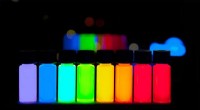
Different noble gases emit different colors because they have different energy levels and transitions:
* Helium (He): Emits a pale yellow-white light.
* Neon (Ne): Emits an intense red-orange light, often associated with neon signs.
* Argon (Ar): Emits a pale violet light.
* Krypton (Kr): Emits a whitish light.
* Xenon (Xe): Emits a bluish-white light.
Therefore, it's not the noble gases themselves that light up, but rather the electrical excitation that causes their electrons to emit photons, resulting in the characteristic colors associated with each gas.