Aqueous Sodium Chloride (Saltwater)
* Ionic Compounds: Sodium chloride (NaCl) is an ionic compound. This means it exists as positively charged sodium ions (Na+) and negatively charged chloride ions (Cl-) held together by electrostatic forces.
* Dissolution: When sodium chloride dissolves in water, the water molecules surround the ions, breaking the ionic bonds and separating them. The ions become free to move about in the solution.
* Charge Carriers: The free-moving ions in solution act as charge carriers. When an electric potential is applied, the positive ions migrate towards the negative electrode (cathode) and the negative ions migrate towards the positive electrode (anode). This movement of charge constitutes an electric current.
Dry Sodium Chloride (Table Salt)
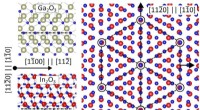
* Crystalline Structure: Dry sodium chloride exists as a crystalline solid. In this structure, the ions are tightly packed in a regular, repeating arrangement.
* No Free Ions: The ions are held rigidly in place by strong electrostatic forces. There are no free-moving ions available to carry an electrical current.
* Insulator: Without mobile charge carriers, dry sodium chloride does not conduct electricity and acts as an insulator.
In Summary:
The key difference is the presence of free-moving ions. Aqueous sodium chloride has free ions that can carry an electric current, while dry sodium chloride does not.