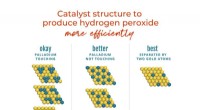
* Lowering activation energy: Catalysts provide an alternative reaction pathway with a lower activation energy. This means less energy is required for the reactants (A2 and B) to reach the transition state and form products (AB).
* Increasing reaction rate: By lowering the activation energy, the catalyst allows more molecules to overcome the energy barrier, leading to a faster rate of reaction.
* Not consumed: A catalyst participates in the reaction but is regenerated at the end, meaning it doesn't get used up. It can continue to catalyze the reaction over and over again.
Important Note: A catalyst only affects the rate of the reaction, it does not change the equilibrium position. It means that the final amounts of reactants and products at equilibrium will be the same with or without the catalyst, but the equilibrium will be reached faster with the catalyst.