* Attractive forces: These hold atoms or molecules together. They are stronger in solids and weaker in liquids.
* Kinetic energy: This is the energy of motion. It's higher in liquids and gases, allowing molecules to move around more freely.
Here's why some atoms or molecules exist as liquids:
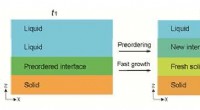
* Intermediate strength of attractive forces: Liquids have stronger attractive forces than gases, but weaker than solids. This means molecules are held together but can still move around.
* Sufficient kinetic energy: The molecules in liquids have enough kinetic energy to overcome some of the attractive forces, allowing them to flow and change shape.
Think of it like this:
* Solids: Imagine a tightly packed crowd, everyone holding onto each other. The people can vibrate but can't move freely.
* Liquids: Imagine a crowd of people dancing and moving around, but still bumping into each other. They can move freely but are still relatively close.
* Gases: Imagine a group of people running around freely in a large space, barely bumping into each other.
Factors that influence the state of matter:
* Temperature: Higher temperatures increase kinetic energy, making it easier for molecules to overcome attractive forces and become liquids or gases.
* Pressure: Increased pressure pushes molecules closer together, increasing attractive forces and making it more likely they'll be in a solid or liquid state.
* Molecular structure: The shape and type of bonds between atoms affect the strength of attractive forces. For example, water molecules have strong hydrogen bonds that keep them in a liquid state at room temperature.
So, in essence, liquids exist because they have a balance of attractive forces and kinetic energy that allows them to move around but still be relatively close together.