Here's a breakdown:
* Double Displacement Reaction: A reaction where the positive and negative ions of two reactants switch partners.
* Insoluble Product: A compound that does not readily dissolve in the solvent (usually water).
* Precipitate: The solid that forms and settles out of the solution during the reaction.
Example:
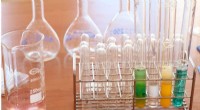
When you mix a solution of silver nitrate (AgNO₃) with a solution of sodium chloride (NaCl), a white precipitate of silver chloride (AgCl) forms.
* AgNO₃ (aq) + NaCl (aq) → AgCl (s) + NaNO₃ (aq)
In this reaction:
* AgNO₃ and NaCl are soluble reactants.
* AgCl is the insoluble product, which precipitates out as a solid.
* NaNO₃ remains dissolved in solution.
Important Note: Precipitates can also form in other types of reactions, but double displacement reactions are the most common.