Here's how it works:
1. Copper ions (Cu²⁺) react with peptide bonds: In the presence of copper ions, peptide bonds form a complex with the copper ions. This complex is colorless.
2. Ammonia acts as a catalyst: Ammonia is added to the reaction mixture to increase the pH and make the solution more alkaline. This helps to stabilize the complex formed between the copper ions and the peptide bonds.
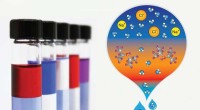
3. Formation of a coloured complex: The complex formed in step 1 then reacts with ammonia to form a violet-coloured complex. The intensity of the colour is directly proportional to the concentration of peptide bonds present.
Therefore, ammonia doesn't directly cause the colour change, but it is a crucial component that aids in the formation of the coloured complex by:
* Increasing the pH: This allows for the formation of the initial copper-peptide bond complex.
* Stabilizing the complex: The alkaline environment created by ammonia helps to stabilize the complex, leading to the formation of the coloured complex.
So, the colour change in the Biuret reaction is a result of the interaction between copper ions, peptide bonds, and ammonia.