Entropy and Phases
* Entropy (S) is a measure of disorder or randomness within a system.
* Phases (solid, liquid, gas) represent different levels of molecular organization.
How Phase Changes Affect Entropy
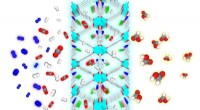
* Solid to Liquid (Melting): Entropy *increases* as molecules gain more freedom of movement. They transition from a tightly packed, ordered state to a more disordered, fluid state.
* Liquid to Gas (Vaporization): Entropy *increases* even more dramatically. Gas molecules have significantly more freedom of motion and are much more dispersed than in the liquid state.
* Gas to Solid (Deposition): Entropy *decreases*. Molecules become more ordered and restricted in their movement as they transition from a dispersed gas to a tightly packed solid.
* Liquid to Solid (Freezing): Entropy *decreases*. Molecules become less mobile and more organized.
Impact on Reactions
* Phase Change as a Reaction Component: If a phase change is part of a reaction (e.g., melting of a solid reactant), the entropy change associated with the phase change is included in the overall entropy change of the reaction.
* Phase Change as a Driving Force: Phase changes can drive reactions. For example, if a reaction produces a gas, the increase in entropy associated with gas formation can make the reaction more favorable.
Example
Consider the reaction:
* H2O (l) → H2O (g)
This is the vaporization of water. The entropy change is positive because the molecules become more disordered and dispersed in the gas phase. The reaction will be favored at higher temperatures because the increase in entropy will be more significant.
Key Points
* Phase changes always involve entropy changes.
* Increased entropy (disorder) is typically favorable for a reaction.
* The magnitude of the entropy change depends on the specific phase change (e.g., melting vs. vaporization).
Important Note:
While phase changes are a major factor in entropy changes, other factors like temperature, pressure, and the number of moles of reactants and products also play a role.