* Non-electrolytes are substances that do not dissociate into ions when dissolved in water. This means they don't produce free-moving charged particles (ions) that can conduct electricity. Examples include sugar, ethanol, and urea.
* Homogeneous mixture means the solution has a uniform composition throughout. The non-electrolyte molecules are evenly distributed within the water molecules.
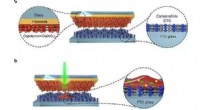
Here's how it looks:
Imagine dropping a sugar cube into water. The sugar dissolves, and the sugar molecules disperse evenly among the water molecules. This results in a clear, sweet solution where you can't visually distinguish the sugar from the water.
Contrast with electrolytes:
Electrolytes, like salt (NaCl), dissociate into ions when dissolved in water (Na+ and Cl-). These ions can then carry an electrical current. The solution would still be homogeneous, but it would be able to conduct electricity.
In summary: Non-electrolyte solutions in water form homogeneous mixtures without the presence of free-moving ions.