1. Opposite Charges Attract:
* Ionic compounds are formed by the electrostatic attraction between positively charged ions (cations) and negatively charged ions (anions). Think of it like magnets: opposite poles attract!
2. Equal and Opposite Charges:
* The key to neutrality is that the total positive charge from the cations must exactly equal the total negative charge from the anions. This means the number of each type of ion present in the compound must be adjusted to achieve this balance.
3. Example: Sodium Chloride (NaCl)
* Sodium (Na) loses one electron to become a +1 cation (Na+).
* Chlorine (Cl) gains one electron to become a -1 anion (Cl-).
* The ratio of sodium to chlorine ions in the compound is 1:1. This ensures that the +1 charge from the sodium ion is exactly balanced by the -1 charge from the chlorine ion, resulting in a neutral compound.
4. More Complex Compounds:
* For compounds with more complex ions, the ratio of cations to anions can be different.
* For example, in magnesium chloride (MgCl2), magnesium (Mg) forms a +2 cation (Mg2+), while chlorine (Cl) still forms a -1 anion (Cl-).
* To achieve neutrality, two chloride ions are needed for every one magnesium ion (Mg2+ + 2Cl- = 0).
5. Overall:
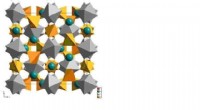
The principle of electrical neutrality is a fundamental concept in chemistry. It explains why ionic compounds are stable and form readily. The balanced charges create a strong electrostatic attraction that holds the ions together in a crystal lattice structure.