1. Homogeneous Mixtures:
* Uniform composition: All parts of the mixture have the same properties and appearance.
* Components are evenly distributed: The different substances are indistinguishable from each other.
* Examples: Saltwater, air, sugar dissolved in water.
2. Heterogeneous Mixtures:
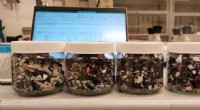
* Non-uniform composition: Different parts of the mixture have different properties and appearance.
* Components are not evenly distributed: The different substances are distinguishable from each other.
* Examples: Sand and water, oil and water, a salad.
Here's a breakdown of how to classify mixtures:
1. Examine the mixture:
* Can you see different components? If yes, it's likely heterogeneous.
* Does it look the same throughout? If yes, it's likely homogeneous.
2. Consider the ability to separate:
* Can the components be easily separated? If yes, it's likely a mixture.
* Can the components be separated by physical means like filtration, evaporation, or magnetism?
Here's a table summarizing the key differences:
| Feature | Homogeneous Mixture | Heterogeneous Mixture |
|---|---|---|
| Composition | Uniform | Non-uniform |
| Appearance | Same throughout | Different throughout |
| Components | Indistinguishable | Distinguishable |
| Examples | Saltwater, air, sugar in water | Sand and water, oil and water, salad |
Remember: Mixtures can be further classified based on the size of the particles:
* Solutions: Particles are dissolved and evenly distributed.
* Suspensions: Particles are large and settle out over time.
* Colloids: Particles are intermediate in size and don't settle out easily.
Understanding the classification of mixtures is important for many scientific and everyday applications, including chemistry, biology, and even cooking.