* Lewis Acids: Accept electron pairs.
* Lewis Bases: Donate electron pairs.
The Structure of SO3:
Sulfur trioxide (SO3) has a central sulfur atom double-bonded to three oxygen atoms. The sulfur atom has an empty d orbital, making it capable of accepting electron pairs.
How SO3 Acts as a Lewis Acid:
* Electron Deficiency: The sulfur atom in SO3 has a formal charge of +2 due to the double bonds with oxygen. This positive charge indicates a deficiency of electrons.
* Empty Orbital: The sulfur atom has an empty d orbital. This empty orbital can readily accept an electron pair from a Lewis base.
Example:
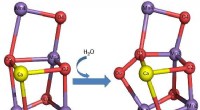
When SO3 reacts with water (H2O), it acts as a Lewis acid:
SO3 + H2O → H2SO4
In this reaction, the oxygen atom in water donates an electron pair to the sulfur atom in SO3, forming a new bond and creating sulfuric acid (H2SO4).