Molecules:
* Nitrogen (N₂): The most abundant gas in the atmosphere, nitrogen exists as diatomic molecules (two nitrogen atoms bonded together).
* Oxygen (O₂): Essential for life, oxygen also exists as diatomic molecules.
* Carbon Dioxide (CO₂): A key greenhouse gas, carbon dioxide is a triatomic molecule (one carbon atom bonded to two oxygen atoms).
* Argon (Ar): While technically an element, argon exists as single, non-reactive atoms in the atmosphere.
* Neon (Ne), Helium (He), Krypton (Kr), Xenon (Xe): These are all noble gases, meaning they are extremely unreactive and exist as single atoms in the atmosphere.
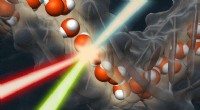
* Water Vapor (H₂O): This is a triatomic molecule, with two hydrogen atoms bonded to an oxygen atom.
Individual Atoms:
* Trace Elements: The atmosphere contains trace amounts of other elements, some of which may exist as individual atoms. Examples include:
* Hydrogen (H): While most hydrogen is bound in water vapor, there are trace amounts of atomic hydrogen in the upper atmosphere.
* Oxygen (O): Atomic oxygen is present in the upper atmosphere, particularly in the ozone layer.
* Sodium (Na): Found in very small amounts, often originating from meteors.
Important Note:
While we usually talk about gases in terms of their common forms (molecules or individual atoms), it's important to remember that all atoms are constantly moving and colliding. Therefore, there will always be a tiny fraction of atoms that are momentarily split apart from their bonds, even in molecules like nitrogen or oxygen. However, the vast majority of these gases exist as molecules in the atmosphere.