Here's how they work:
* Channel proteins: These proteins form channels through the membrane, allowing specific molecules to pass through. The channel is typically selective, meaning only certain molecules can fit through. This allows for the transport of water, ions, and small molecules like glucose.
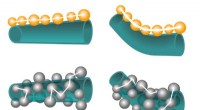
* Carrier proteins: These proteins bind to the molecule they're transporting and undergo a conformational change to move the molecule across the membrane. This process is specific, meaning each carrier protein can only bind to a particular type of molecule. Examples include the transport of amino acids, sugars, and some vitamins.
Important points about facilitated diffusion:
* Passive process: It doesn't require energy from the cell (unlike active transport).
* Down the concentration gradient: Molecules move from an area of high concentration to an area of low concentration.
* Specific: Transport proteins are specific for the molecules they transport.
* Saturable: As the concentration of the transported molecule increases, the rate of transport eventually plateaus, as all the transport proteins become saturated.
Therefore, transport proteins are the key players in facilitated diffusion, enabling the efficient and specific movement of molecules across cell membranes without the need for cellular energy expenditure.