Spectroscopy:
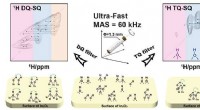
* NMR (Nuclear Magnetic Resonance): Both chemists and physicists use NMR to study the structure and dynamics of molecules. Chemists use it to identify and characterize compounds, while physicists use it to study the properties of atomic nuclei and molecular interactions.
* IR (Infrared Spectroscopy): Chemists use IR to identify functional groups in molecules, while physicists use it to study vibrational modes and molecular dynamics.
* UV-Vis (Ultraviolet-Visible Spectroscopy): Chemists use UV-Vis to study electronic transitions in molecules, while physicists use it to study the absorption and emission properties of materials.
Materials Science:
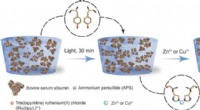
* Synthesis and Characterization of Nanomaterials: Chemists synthesize new nanomaterials, while physicists study their unique optical, electrical, and mechanical properties.
* Development of New Batteries: Chemists design the electrochemical reactions that power batteries, while physicists study the flow of electrons and the performance of battery materials.
* Superconductivity: Both chemists and physicists study the properties of superconductors, seeking to understand the mechanism behind this phenomenon and develop new superconducting materials.
Quantum Chemistry:
* Computational Modeling of Molecular Systems: Chemists use quantum mechanics to model and predict the behavior of molecules, while physicists develop the theoretical frameworks for understanding quantum phenomena.
* Development of New Catalysts: Chemists use quantum chemistry to design new catalysts with specific properties, while physicists study the electronic structure and reactivity of these catalysts.
Atomic and Molecular Physics:
* Laser Spectroscopy: Chemists use lasers to study the structure and dynamics of molecules, while physicists use lasers to investigate fundamental interactions between light and matter.
* Collision Studies: Chemists study chemical reactions that occur when molecules collide, while physicists study the fundamental laws of scattering and energy transfer during collisions.
These are just a few examples, and the list goes on! The overlap between chemistry and physics is vast and constantly evolving. Many experiments require a deep understanding of both disciplines to be successful.