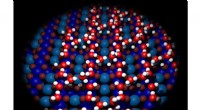
* Hydrolysis: While NaCl and MgCl₂ themselves are neutral, their ions can undergo hydrolysis in water. This means that the ions react with water to form a slightly acidic or basic solution.
* NaCl: The sodium ion (Na⁺) does not hydrolyze significantly. The chloride ion (Cl⁻) can undergo slight hydrolysis, producing a very small amount of hydroxide ions (OH⁻) and making the solution *very slightly basic*. However, this effect is so small that it's considered negligible.
* MgCl₂: The magnesium ion (Mg²⁺) is more prone to hydrolysis than the sodium ion. It reacts with water to produce a small amount of hydronium ions (H₃O⁺), making the solution *slightly acidic*.
* Indicators: Indicators are substances that change color depending on the pH of the solution. If an indicator is used to test a solution of NaCl or MgCl₂, it might show a slight color change, suggesting a slight acidity or basicity. However, this change is often within the margin of error for the indicator and may not be a true reflection of the solution's actual pH.
In summary:
* NaCl and MgCl₂ are both neutral salts.
* Their ions can undergo slight hydrolysis, leading to a very small change in pH.
* Indicators may show a slight color change due to hydrolysis, but this doesn't necessarily mean the solution is acidic or basic.
It's important to remember that the term "neutral" in chemistry is often used relative to a specific pH range. While NaCl and MgCl₂ are considered neutral for most practical purposes, they might show a slight deviation from a perfectly neutral pH due to the subtle effects of hydrolysis.